Comparing 4 AI multi-model orchestrators
Verdant AI, Use AI, QM (Quartermaster) and Omnigent (databricks) serve completely different layers of the artificial intelligence ecosystem, ranging from parallel coding agents and model aggregators to team-based multi-user agent infrastructure. [1, 2, 3, 6]
Verdant AI
- What it is: An agentic, multi-model software development platform and coding assistant designed to build and manage full production applications from natural language. [2, 4, 5]
- Core features: Operates using multiple parallel agents inside isolated Git worktrees, allowing tasks like UI creation, backend logic, and testing to occur simultaneously without code merge conflicts. It features a comprehensive "Plan Mode" that asks clarifying questions before executing code. [6, 7, 8]
- Best for: Individual developers, builders, and small teams looking for an autonomous AI co-founder or multi-agent pair programmer that handles complex multi-file coding workflows. [4, 9]
Use AI (use.ai)
- What it is: An all-in-one AI workspace and model hub that aggregates 25+ leading artificial intelligence models (such as GPT-5, Claude, Gemini, DeepSeek, and Grok) into a single consumer-facing interface and subscription. [1]
- Core features: Eliminates tab-switching and multiple subscriptions by letting users chat with, compare side-by-side, and fluidly switch between top-tier foundation models on the fly. It includes general productivity additions like web search, document analysis, and deep research tools. [1]
- Best for: Casual power users, writers, and researchers who want unified access to multiple distinct LLMs under one dashboard rather than deep, automated engineering environments. [1, 10]
QM (Quartermaster by Y Combinator / yc-software)
- What it is: An open-source, self-hosted multiplayer agent harness and control plane for organizations and engineering teams, rather than an end-user chatbot or model. [3, 11]
- Core features: Instead of a single assistant tied to one user, QM provides scoped workspaces, isolated memories, keychain permissions, and durable sandboxes for every employee and shared room (like a Slack channel or project). It allows underlying coding engines (like Claude Code, OpenCode, or Codex) to plug safely into a unified organizational policy and identity layer. [3, 12, 13]
- Best for: Technical organizations and startups wanting to deploy collaborative, self-hosted, policy-guarded AI agents across team communication platforms like Slack. [3, 11, 14]
If you'd like, tell me:
- Are you looking for a developer coding tool, a general chat aggregator, or an infrastructure/team setup?
I can give you a deeper technical breakdown tailored to your exact use case.
[1] https://www.trustpilot.com [2] https://www.verdent.ai [3] https://linas.substack.com [4] https://www.youtube.com [5] https://www.youtube.com [6] https://www.youtube.com [7] https://andrewbaisden.medium.com [8] https://www.youtube.com [9] https://www.youtube.com [10] https://www.youtube.com [11] https://wavect.io [12] https://github.com [13] https://github.com [14] https://www.youtube.com
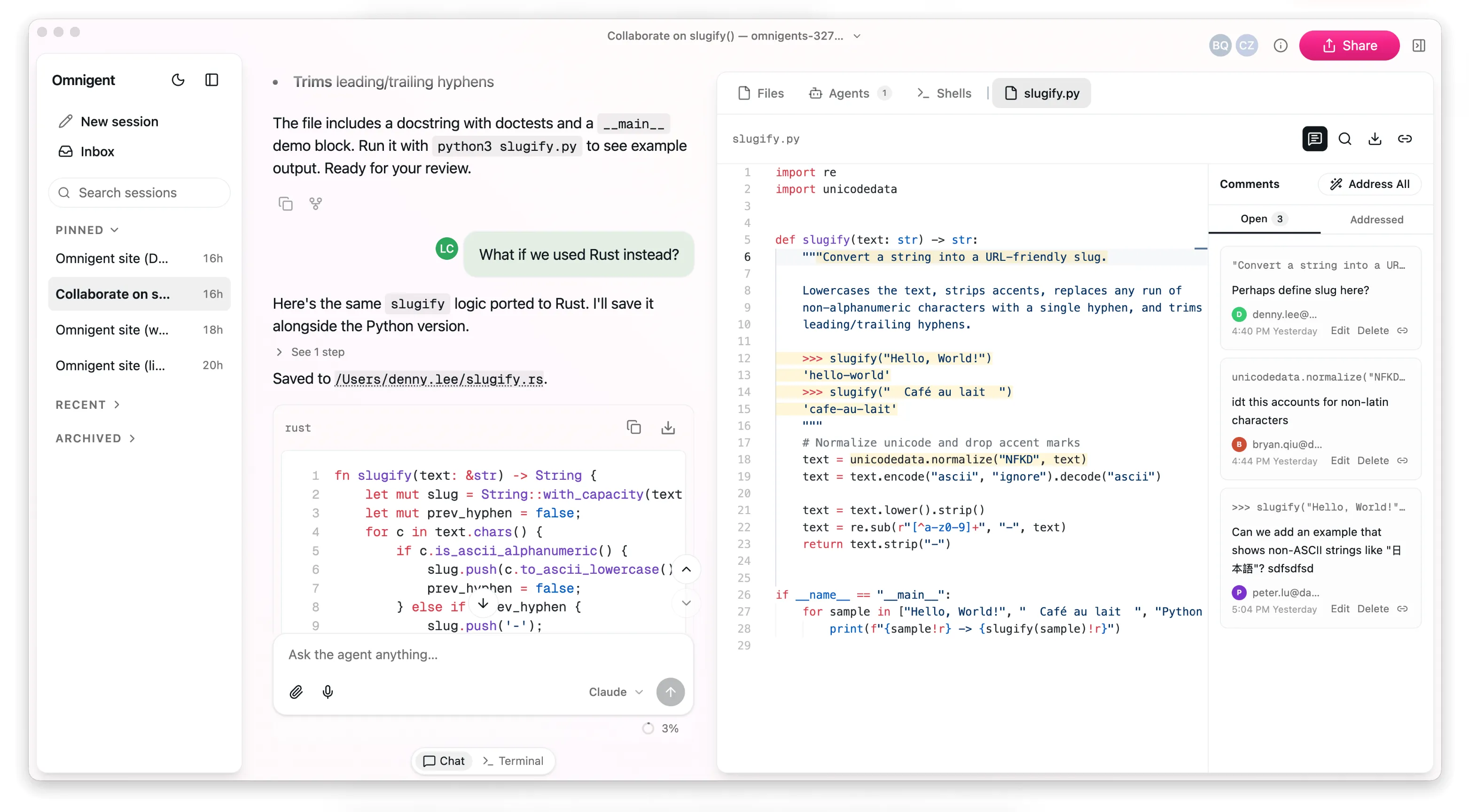
Omnigent fits squarely into the advanced infrastructure layer of this ecosystem, acting as an open-source "meta-harness" and control plane designed to orchestrate and manage other AI agents. [1, 2] Built by the Databricks AI team, it introduces a unified management layer so you don't have to bounce between isolated AI silos. [3, 4, 5] Here is how Omnigent compares to the rest of the list:
Omnigent
- What it is: An open-source, Apache 2.0-licensed framework that sits above the individual AI coding assistants and agents you already use (like Claude Code, Codex, Devin, and Cursor) to provide a single, unified layer for orchestration, governance, and live team collaboration. [4, 5]
- Core features:
- Composition: Seamlessly blends different models and multi-agent workflows into one session. It ships with built-in personas like Polly (a tech-lead orchestrator that splits code tasks into parallel Git worktrees using separate underlying sub-agents) and Debby (a multi-model brainstorming partner that pits models against each other in debate).
- Control: Enforces stateful, data-centric guardrails, spend caps, and network boundaries at the framework layer rather than relies on flimsy system prompts.
- Collaboration: Generates a secure live URL for any active terminal or web agent session, letting entire team members co-drive, audit, or steer the AI in real time. [3, 4, 6, 7, 8]
- Best for: Engineering teams and organizations that want to coordinate multiple different agent frameworks under a single, highly auditable security perimeter. [4, 5]
Expanded Comparison Table
| Tool | Primary Category | Operating Layer | Target Audience | Primary Strengths |
|---|---|---|---|---|
| Verdant AI | Agentic Coding App | End-user Agent Platform: Executes its own multi-file parallel coding trees. | ||
| Individual Devs & Startups | Zero-config "Plan Mode", isolated parallel code building, production-ready output. | |||
| Use AI | Model Aggregator | UI Workspace Layer: Merges 25+ model chat views into a single web application interface. | ||
| General Power Users & Writers | Cost-efficient model switching, side-by-side prompt testing, deep research without code. |
| | QM | Multi-Player Agent Harness | Organizational Control Plane: Embeds multi-user agents into shared team messaging workspaces (like Slack). | Collaborative Enterprises | Secure team workspace isolation, shared channel memory, credential gatekeeping. | | Omnigent | Meta-Harness Orchestrator | Interoperability Control Plane: Glues disparate terminal and developer agents into a single managed runtime. | Advanced AI & Dev Teams | Cross-vendor agent pipelines, stateful cost/security sandboxing, live multi-device co-driving. |
Summary of Differences
While Use AI simply lets humans toggle between model chatbots, Verdant AI actually acts as the coding worker bee. Moving up the stack, QM and Omnigent are both open-source infrastructure tools designed to solve the chaos of deployment. However, QM focuses on the human team environment (mapping agents to enterprise users and Slack rooms), whereas Omnigent on GitHub focuses on agent interoperability (making terminal agents talk to each other safely, enforcing cross-agent reviews, and applying strict system sandbox rules). [5, 7] Would you like to explore Omnigent's contextual security policies, or do you want an architecture example of how to deploy Omnigent alongside QM for your team? [1]
[1] https://www.youtube.com [2] https://omnigent.ai [3] https://medium.com [4] https://ai.dosa.dev [5] https://smbtech.au [6] https://omnigent.ai [7] https://github.com [8] https://www.youtube.com